"Knowledge speaks, but wisdom listens." - Jimi Hendrix

"Obstacles are those scary things you see when you take your eyes off the goal." - Henry Ford

Tuesday, March 1, 2011

Railroad Acts

Elkins Act (1903) - Created by Congress and endorsed by TR, the Elkins Act imposed heavy fines on railroads that gave rebates and on those shippers that accepted them.


Hepburn Act (1906) - The Hepburn Act restricted free passes and expanded the Interstate Commerce Commission to include express companies, sleeping car companies, and pipelines.
Gave the Commission the teeth to back up their talk.


Tuesday, February 8, 2011

Pope John Paul II Catholic High School | Alabama | EurosportScoreboard.com

Pope John Paul II Catholic High School Alabama EurosportScoreboard.com
Follow PJPII Boys soccer scores, rankings, and schedule so you can come out and support the team.

Tuesday, February 1, 2011

Bellowing Herds of Bison and the End of the Trail


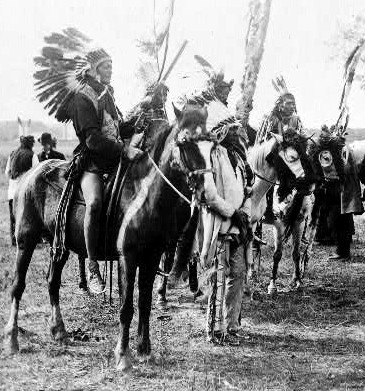
Buffalo were a main component in the lives of Native Americans. They were used for food, their dung for fuel, and their hide for clothing, lariats, and harnesses. After the Civil War, over 15 million still roamed the plains. With the building of the railroads, their numbers soon declined as they were hunted by workers for hides, select cuts of meat, or just for sport (many were killed by rednecks hunting from the train.) By 1885, only a thousand or so buffalo were still alive.


General awareness to the plight of the Native Americans grew in the 1880's. Helen Hunt wrote two books - A Century of Dishonor and Ramona on the treatment of Native Americans that raised awareness and were widely read. Christian reformers sought to bring Christianize the Native Americans but sometimes resorted to extreme measures.


A hard line was taken towards the Native americans when their Sacred Sun Dance was forbidden. When the Ghost Dance cult spread to the Sioux in 1890, the army stamped it out at the Battle of Wounded Knee where 200 Native americans and 29 soldiers were killed.


The Dawes Act of 1887 dissolved many tribes as legal entities, got rid of tribal ownership of land, and set up individual Indian family heads with 160 acres of land. It also promised them citizenship in 25 years if they behaved well. Proceeds gained from the selling of the land taken from the Native Americans was used to educate and civilize the native people. This act showed the hard line taken by the government towards Native americans until 1934 with the Indian Reorganization Act that restored the tribal basis of native life.

Friday, January 28, 2011

America's Exceptionalism - Obama's State of the Union Address

"It's no secret that those of us here tonight have had our differences over the last two years. The debates have been contentious; we have fought fiercely for our beliefs. And that's a good thing. That's what a robust democracy demands. That's what helps set us apart as a nation." Par. 2

"We are part of the American family. We believe that in a country where every race and faith and point of view can be found, we are still bound together as one people; that we share common hopes and a common creed; that the dreams of a little girl in Tucson are not so different than those of our own children, and that they all deserve the chance to be fulfilled.

That, too, is what sets us apart as a nation. " Par. 4

"We're the nation that put cars in driveways and computers in offices; the nation of Edison and the Wright brothers; of Google and Facebook. In America, innovation doesn't just change our lives. It is how we make our living. (Applause.)"

"We have to do better. America is the nation that built the transcontinental railroad, brought electricity to rural communities, constructed the Interstate Highway System. The jobs created by these projects didn't just come from laying down track or pavement. They came from businesses that opened near a town's new train station or the new off-ramp."

"We may have differences in policy, but we all believe in the rights enshrined in our Constitution. We may have different opinions, but we believe in the same promise that says this is a place where you can make it if you try. We may have different backgrounds, but we believe in the same dream that says this is a country where anything is possible. No matter who you are. No matter where you come from.

That dream is why I can stand here before you tonight. That dream is why a working-class kid from Scranton can sit behind me. (Laughter and applause.) That dream is why someone who began by sweeping the floors of his father's Cincinnati bar can preside as Speaker of the House in the greatest nation on Earth." (Applause.)

"From the earliest days of our founding, America has been the story of ordinary people who dare to dream. That's how we win the future.

We're a nation that says, "I might not have a lot of money, but I have this great idea for a new company." "I might not come from a family of college graduates, but I will be the first to get my degree." "I might not know those people in trouble, but I think I can help them, and I need to try." "I'm not sure how we'll reach that better place beyond the horizon, but I know we'll get there. I know we will."

We do big things. (Applause.)

The idea of America endures. Our destiny remains our choice. And tonight, more than two centuries later, it's because of our people that our future is hopeful, our journey goes forward, and the state of our union is strong."

Sunday, January 16, 2011

Tuesday, September 28, 2010

Foreign Aid From France And Friends


French aid, began in 1778 with a treaty came in the form of GUNS and other much needed supplies. These supplies proved vital in the American push to extend the war. French troops joined the war in 1778 in an attack on Newport, Rhode Island.


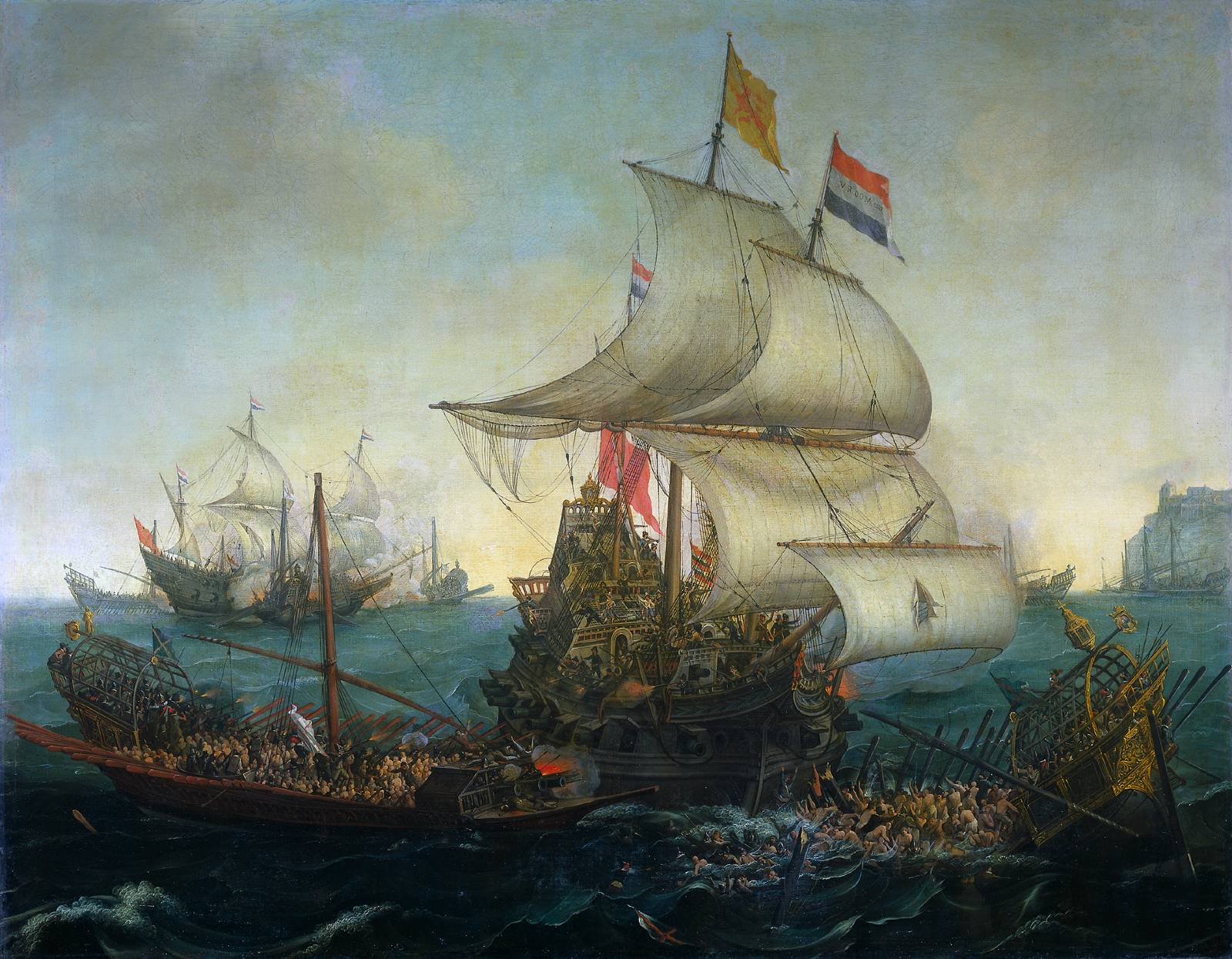
The Spanish joined in 1779 over a dispute with Britain over the Gibraltar. The Dutch joined following a dispute over terms of neutrality with the British.


The Spanish contributed mainly in the form of their powerful navy. They helped by causing the British to divert troops to other locations such as Gibraltar where they sieged it for 4 years though unsuccessfully. Spain also contributed gold and silver.


The Dutch also contributed in the form of their navy. Their contibutions were mainly in India. They, along with the French fought the British because all three had outposts there. The Dutch also contributed goods and money.


In 1780 the Armed Neutrality was formed by Catherine the Great, it included Denmark-Norway, Sweden, the Holy Roman Empire, Prussia, Portugal, and the Two Siciles.


In 1781, Admiral De Grasse and Rochambeau of the French helped defeat the British at the Battle of Yorktown. This was the most important French contribution.


Both France and Spain received territorial gains when America won its independence.
France gained Tobago, Saint Lucia, the Senegal River area, and fishing rights in Terra Nova. Spain gained Minorca and Florida.

Overall, the French made the biggest contributions to the Americans lending them money, men, and supplies. They also contributed ships and helped the Americans build up their meager navy. They made telling contributions on all fronts of the war. The Spanish helped with their navy and movey and contributed in the South and in Minorca. The Dutch contributed their navy, goods, and money and fought the British in India. Contributions by the Spanish and the Dutch have sadly been overlooked. The Spanish played a pretty crucial role in our independence. As is common, British stupidity is evident here. They forced both the Spanish and the Dutch to join up with the French in the cause of American Independence.

Thursday, September 9, 2010

Frantic French Find Flimsy Foothold For New France


Samuel De Champlain, the "Father of New France."


Quebec, founded in 1608 becomes capital of French empire in the New World.


French make fateful alliance with the Huron Indians, aiding them in their war against the Iroqouis.


King Louis XIV (not actually shown, though possibly better looking...) began French interests in the New World.


French peasants already in the English colonies or back in France had no economic motive to move to Canada. French Huguenots were not allowed there either.


Despite its size, New France had a population of only 60,000 including its Canadian territories. France's attempt to turn its North American holdings into a successful colonizing venture like those of the Britain failed and despite its grandeur it lost its North American holdings.